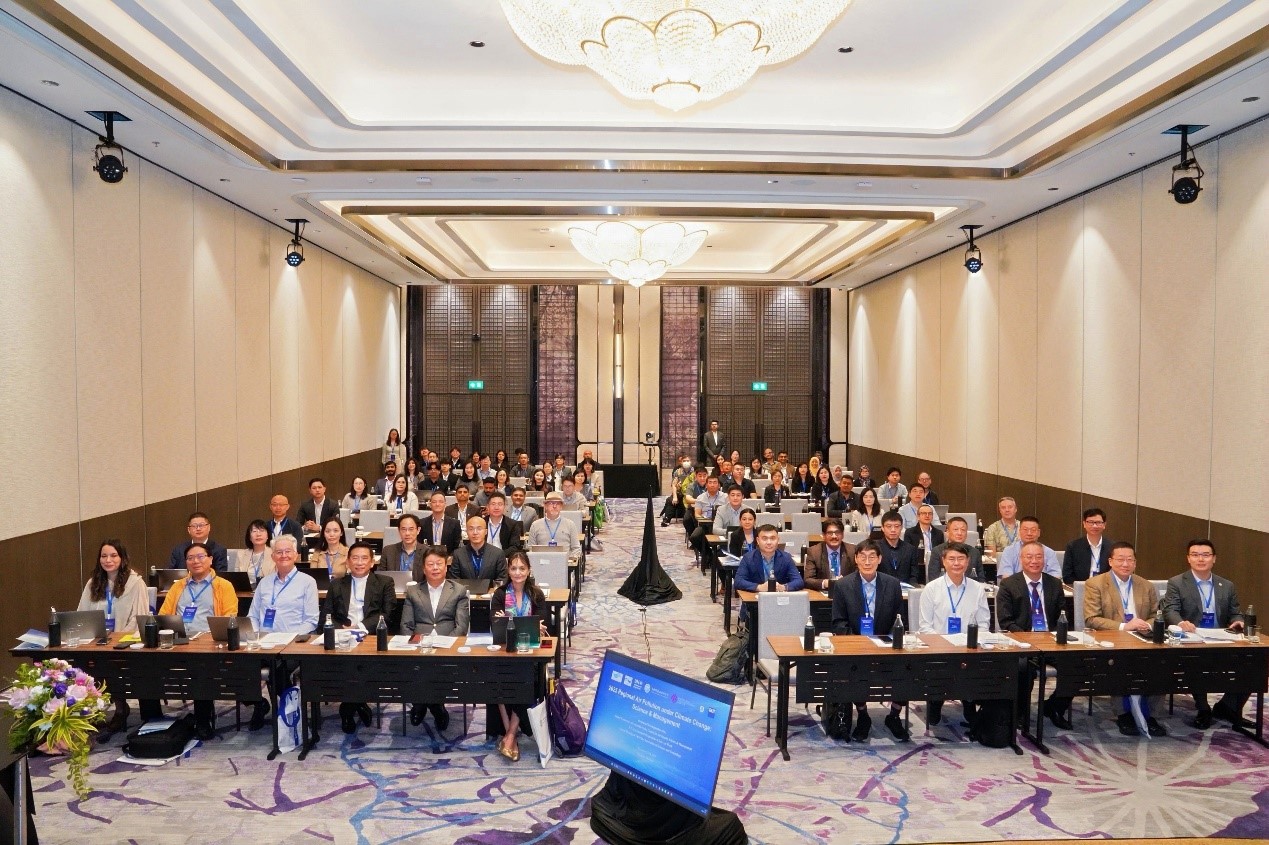
Bangkok, Thailand – The International Conference “2025 Regional Air Pollution Under Climate Change: Science and Management” was successfully concluded in Bangkok, Thailand, from November 27 to 28, 2025. The event was organized by the Chinese Research Academy of Environmental Sciences (CRAES), in collaboration with the Australia-China Center for Air Quality Science and Management, the United Nations Environment Programme (UNEP), and the Thai-Sino Association of Science and Technology(TSAST). It was co-organized by Jinan University, Hong Kong Polytechnic University, and Queensland University of Technology(QUT).
The opening ceremony on November 27 featured addresses by Mr. Xu Yisheng, Chief Engineer of CRAES; Ms. Soraya Smaoun, Coordinator of the Air Quality and Mobility Unit at UNEP; Professor Jiang Biao, Chief Scientist of the CAS Innovation and Cooperation Center (Bangkok); and Mr. Pichai Sonchaeng, Secretary-General of TSAST.
Adopting a hybrid format, the conference attracted approximately 100 participants onsite and online, including experts, scholars, government officials, and industry representatives from China, Australia, New Zealand, South Asia, Southeast Asia, East Asia, and other regions. Representatives from international organizations such as the International Centre for Integrated Mountain Development (ICIMOD), the C40 Cities Climate Leadership Group, and the BRI International Green Development Coalition also attended.
As a key event of the UNEP Clean Air Week series, this conference marked the inaugural overseas large-scale scientific exchange initiative jointly launched by the CRAES-led "Asia-Pacific Platform for Regional Green Development and Environmental Technology Innovation." Recognized for its high academic and practical value, the conference received widespread attention and positive feedback, effectively showcasing China's international influence in air quality governance.

Fostering International Synergy for a Professional Exchange Platform
Aligned with the annual meetings of the ACC-AQ and TSAST, and integrated into UNEP Clean Air Week, this key international academic forum aimed to enhance exchanges and cooperation in atmospheric environmental science and management across the Asia-Pacific region. The discussions centered on three core themes: "Sources, Causes, and Interactions between Regional Air Pollution and Climate Change," "Progress and Case Studies in Regional Air Pollution Control," and "Opportunities and Challenges for Regional Cooperation in Air Quality Improvement." The conference established a high-quality platform for advancing multilateral cooperation and collaborative governance. It also provided a significant opportunity for CRAES to share China's experience in air pollution control and to engage deeply in global environmental governance.
Showcasing R&D and Governance Capabilities through Multiple Avenues
CRAES experts actively contributed Chinese insights and solutions during the conference. Researcher Gao Jian presented a keynote titled "Air Pollution Control in China: Regional Actions and Urban Practices," systematically outlining the planning, strategies, and practical outcomes of China's regional and urban air pollution control efforts. Using representative cities as examples, he detailed the implementation pathways and effectiveness of the "One City, One Policy" tailored approach and related technologies.
In the governance case study session, Researcher Fu Mingliang presented his work on "The Identification Capability of Road Remote Sensing Technology for High-Emission Vehicles," which provides critical technical support for the precise regulation of mobile source pollution.

Expanding Reach and Generating Positive Feedback via Hybrid Participation
The hybrid format enabled broad virtual participation. Several experts shared insights online, including Professor Fay Johnston from the University of Tasmania, who discussed the health impacts of biomass burning, and Ms. Christine Joy Sajol from Quezon City, Philippines, who presented local air quality management plans, further extending the conference's reach and impact.
The conference facilitated the convergence of cutting-edge international research and practical case studies. Participants spoke highly of the event, noting the significant value of the shared scientific research and policy experiences, particularly CRAES's achievements in regional governance technical support, sector-specific in-depth pollution control, and mobile source monitoring. Representatives from international organizations emphasized that China's technological advancements and governance practices effectively address pertinent environmental challenges in Southeast and South Asia, offering valuable insights for regional collaborative governance.

Deepening International Cooperation and Sustaining CRAES’s Contributions
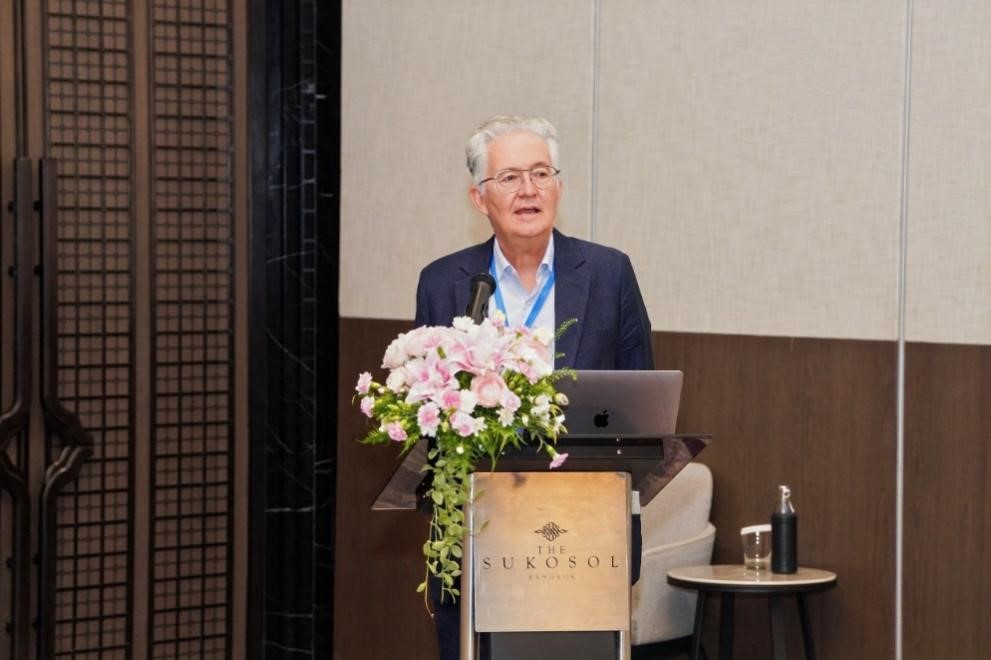
Professor Zoran Ristovski from QUT presided over the closing ceremony, where he systematically summarized the conference outcomes and outlined future directions for cooperation in regional atmospheric environmental research.
The successful convening of this conference not only facilitated knowledge sharing and experience exchange on air pollution and climate change among Asia-Pacific nations but also expanded CRAES's collaborative network within the global atmospheric environmental governance community.
Moving forward, CRAES will continue to leverage its scientific research and technological strengths, deepen exchanges and collaboration with international partners, actively participate in global environmental governance, and consistently share China's experience and technological solutions in air pollution control. Through these efforts, CRAES is committed to making greater contributions to global air quality improvement and addressing the challenges of climate change.